Skip to content
Ever walked into a beautifully designed Dubai apartment and wondered why the space feels so warm and luxurious… even when the furniture is simple?
Sometimes the secret isn’t the sofa. Or the lighting.
It’s the rugs.
Interior designers in Dubai often use a small trick that most people overlook. Layering rugs on top of carpet. Sounds odd at first, right? A rug on a carpet? But when it’s done well, the effect is surprisingly stylish. The room suddenly feels deeper, softer, more “put together.”
And honestly, it’s one of the easiest ways to upgrade a space without changing the whole floor.
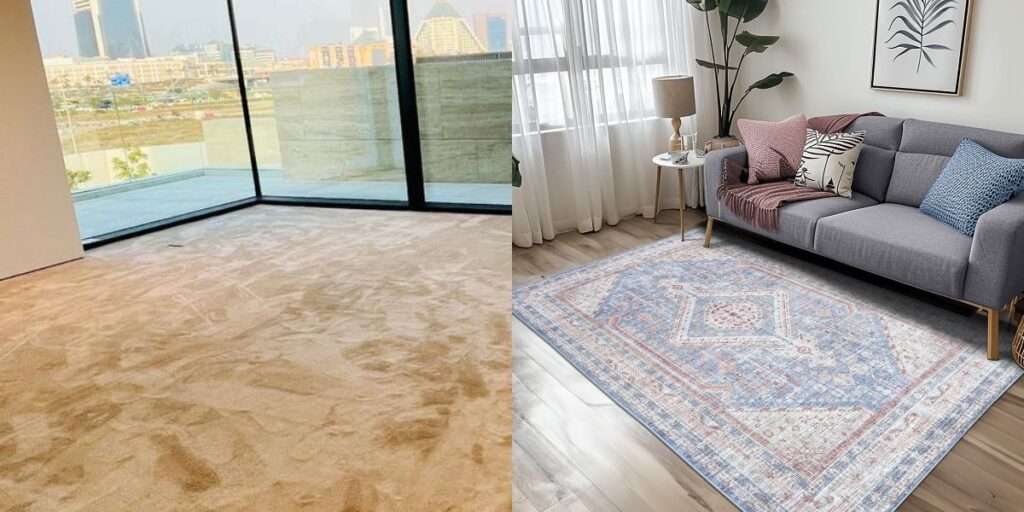
Many homeowners exploring Carpets and Rugs Dubai start with a neutral carpet, then add a decorative rug on top to bring personality into the room. No renovation, no huge budget, just a smart styling move.
So, if you’ve got carpet already and the room still feels unfinished, this might be exactly what you need. Let’s talk about how to actually do it.
Why Layering Rugs Works So Well
Here’s the thing. A single carpet can sometimes look a little flat. Especially in modern Dubai interiors, where neutral tones are everywhere, beige floors, cream sofas, soft grey walls.
Nice, yes. But also, a bit predictable.
Layering rugs breaks that monotony. It adds contrast, texture, and a focal point in the room. Suddenly, your eyes have somewhere to land.
It also helps large spaces feel more comfortable. Dubai homes often have open living areas and wide-open floor plans. Small detail. Big difference.
Start with a Calm, Neutral Base
Most successful rug layering starts with something simple underneath.
Think of the base carpet as the room’s background. It shouldn’t shout for attention. Instead, it quietly supports everything else.
Neutral shades usually work best here. Beige, sand, cream, soft grey, these colors are incredibly common in Carpets and Rugs Dubai collections because they blend easily with modern interiors.
A large carpet in one of these tones creates a calm surface. Once that’s in place, you can start playing with the top rug.
And that’s where the personality comes in.
The Top Rug Is the Star
The rug you place on top should feel more expressive. Maybe it has patterns. Maybe richer colors. Maybe a softer texture.
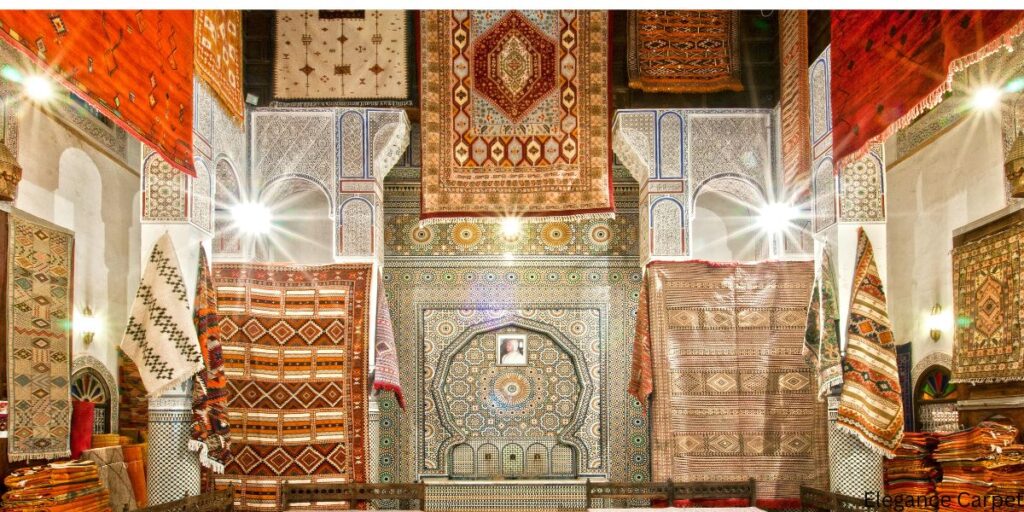
Persian-inspired rugs are a favorite in Dubai homes. Turkish patterns show up a lot too, especially in living rooms where people want a mix of tradition and modern style.
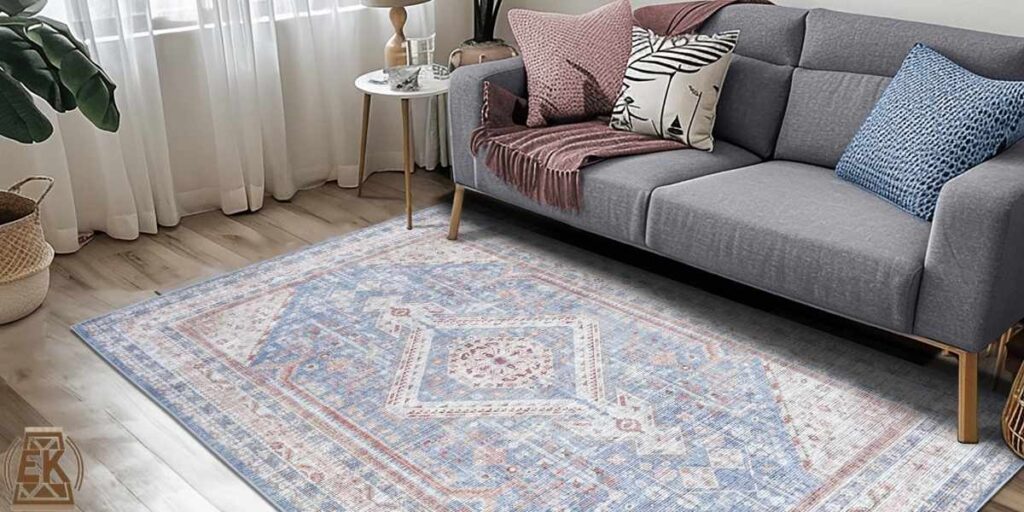
But it doesn’t need to be complicated. Even a simple wool rug can change the feel of the room. The key is size; the top rug should always be smaller so the bottom layer stays visible around the edges.
Texture Matters More Than People Think
A lot of people focus only on color when choosing rugs. But texture… that’s where the real magic happens. Imagine placing a thick, fluffy rug on top of another thick, fluffy carpet. It feels heavy and unstable. The layers blur together.
Now imagine a flat woven carpet with a soft wool rug on top. Suddenly, you can see and feel the difference. The contrast adds depth.
Designers use this trick constantly. Mixing textures makes the space more interesting without making it visually chaotic. And it works in almost every room.
Slightly Off-Center Can Look Better
Here’s something that surprises people. Rugs don’t always have to be perfectly centered.
In fact, some of the most stylish interiors place the top rug just a little off-center. Maybe angled slightly under the coffee table. Maybe shifted toward the seating area. It creates a relaxed, lived-in feeling.
Perfect symmetry can sometimes feel too staged, almost like a showroom. A small shift in placement makes the room feel more natural, like someone actually lives there.
Interior stylists in Dubai do this all the time, especially in modern apartments.
Layering Helps Define Spaces
In large homes or open plan apartments, one room often serves multiple purposes. A living area might also include a reading corner. Or a lounge space. Sometimes even a small workspace.
Layered rugs help visually separate these zones without building walls.
For example, a patterned rug placed over a larger carpet under the coffee table can clearly define the seating area. Another rug near a chair and lamp might quietly suggest a reading nook.
It’s simple. But your brain picks up the boundaries instantly.
Bedrooms benefit from this, too. A decorative rug at the foot of the bed, layered over a neutral carpet, adds warmth and makes the space feel more luxurious.
Shapes Can Change the Whole Look
Most people stick with rectangular rugs because they’re safe. But mixing shapes can be surprisingly effective.
Imagine a round rug placed on top of a large rectangular carpet. Suddenly there’s a focal point in the room. The space feels more dynamic. This works beautifully under coffee tables or in the center of a seating arrangement.
Runners are another fun option. Placing a long runner over a larger carpet in an entryway or hallway adds movement to the space.
It’s the kind of detail that makes guests pause for a moment and notice the design.
Anchor the Rug with Furniture
One small styling mistake people make is leaving the top rug floating alone in the middle of the room. Without something anchoring it, the rug can slide or look disconnected from the rest of the space.
Furniture helps solve that.
A coffee table placed partly on the rug instantly stabilizes the layout. Even letting the front legs of a sofa touch the rug can make everything feel more intentional.
It also keeps the rug from shifting as people walk across it. Simple fix. Huge improvement.
Color Balance Is Important
When layering rugs, balance matters more than boldness.
If the carpet underneath is neutral, you have room to experiment with colors and patterns on the top rug. Deep reds, soft blues, warm earthy tones, these can all look beautiful against a calm base.
But if the carpet already has strong patterns, the top rug should probably stay simple.
Too many competing designs can overwhelm the room.
A good trick is to repeat one color between the two rugs. Even a small shared tone helps tie the layers together visually.
A Few Mistakes to Avoid
Some layering attempts fail not because the idea is wrong, but because of small details.
Using two rugs that are almost the same size often looks accidental. The eye can’t tell which one is supposed to be the base.
Layering very thick rugs on top of thick carpets can also feel unstable underfoot.
And combining too many busy patterns tends to create visual clutter instead of style.
Keeping things balanced usually works best.
Why This Style Is So Popular in Dubai
Dubai interiors are known for blending comfort with luxury.
Layered rugs fit perfectly into that idea. They add warmth without heavy decoration. They introduce texture without overwhelming the space.
And with the huge selection of Carpets and Rugs Dubai, homeowners have endless options to experiment with.
You can change the look of a room simply by swapping the top rug.
Try a bold pattern in winter. Something lighter in summer. Move things around. See what works.
Interior design doesn’t always need a big makeover.
Sometimes it’s just one rug placed in the right spot.
Final Thoughts
Layering rugs might sound like a small detail, but it can completely transform a room.
Start with a neutral carpet. Add a smaller rug that brings color or texture. Let a bit of the base layer show around the edges. Then step back and see how the space feels. Warmer. Softer. More interesting.
And honestly? Once you start experimenting with layered rugs, it’s hard to go back to just one. If you’re still confused, book a free consultation with our experts.
[Book Now]
FAQs: Layering Rugs on Carpet in Dubai
Can I layer rugs on any carpet?
Yes, but choose a low pile or flat weave base for stability. Thick, plush carpets may make the top rug slip or feel uneven.
What size should the top rug be?
Go for 60–70% of the base rug size. The base layer should peek around the edges for a balanced look.
Do textures matter?
Absolutely. Mix flat-weave with soft wool or jute with plush rugs. Texture contrast adds depth and interest.
Can layering work in bedrooms?
Yes. Place a decorative rug at the foot or sides of the bed. It adds warmth and a luxurious feel without overwhelming the space.