Skip to content
We know it can be frustrating when you have to make window treatment choices for your house. Most homeowners are unsure of which window treatment will work best and look good. The room should be stylish and cozy. You also need to manage temperature, control light, and maintain privacy. Understanding the differences between curtains and blinds can help you solve this issue. You can improve your home decor and enjoy maximum comfort by making the right selection.
In this blog post, we will explain how blinds and curtains differ from each other. You will also learn about the materials, styles, durability, light control, and maintenance. After reading the article, you will be able to select the best window treatment for your room confidently. So, let’s get started!
Understanding Curtains
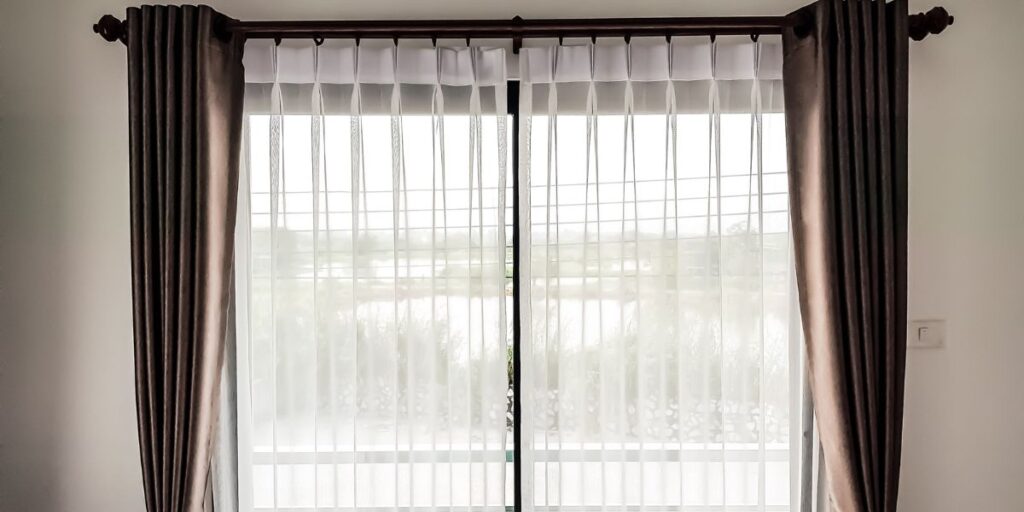
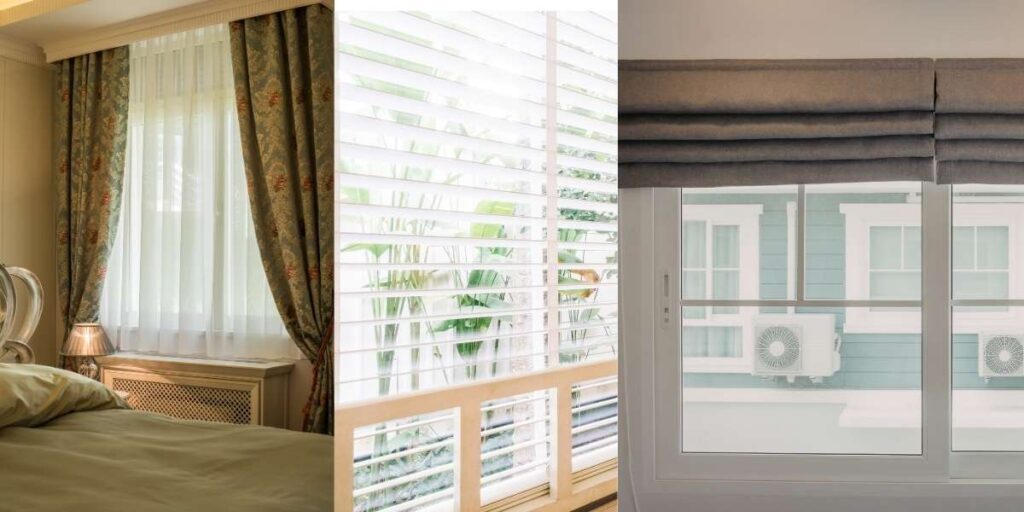
The curtains are made of decorative, soft window coverings. They are hung on rails or rods, adding warmth and texture. The curtains are available in different fabrics such as velvet, linen, cotton, or polyester. This makes them suitable for a wide range of home decor styles. Fabric and lining can be used to block out sunlight, provide privacy, and reduce noise.
Types of curtains
- Blackout curtains: Perfect for home theatres or bedrooms, they block out nearly all the light.
- Sheer curtains: They allow for sunlight to enter while still maintaining privacy.
- Thermal curtains: Keep heat out of the room in winter, and in during summer.
- Patterned or Decorative Curtains: Add style and color to your room.
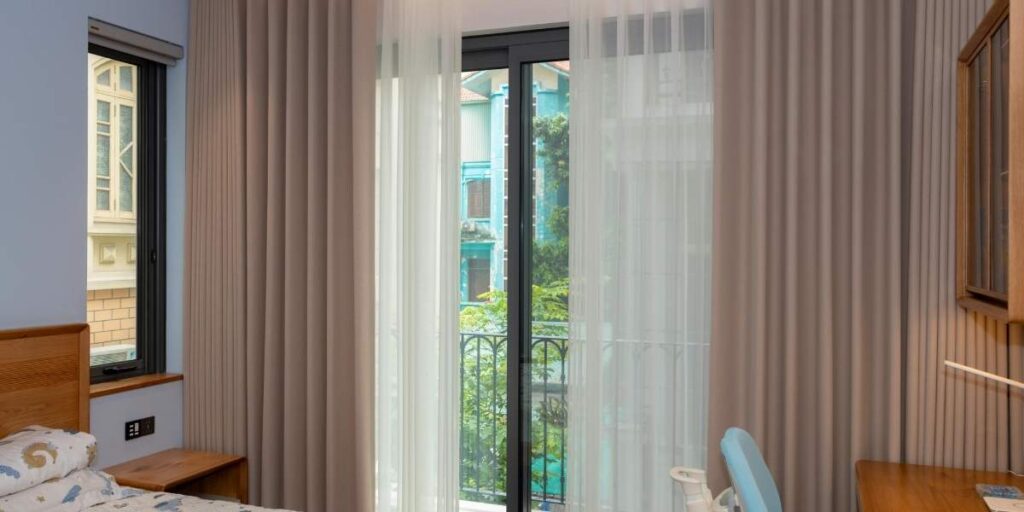
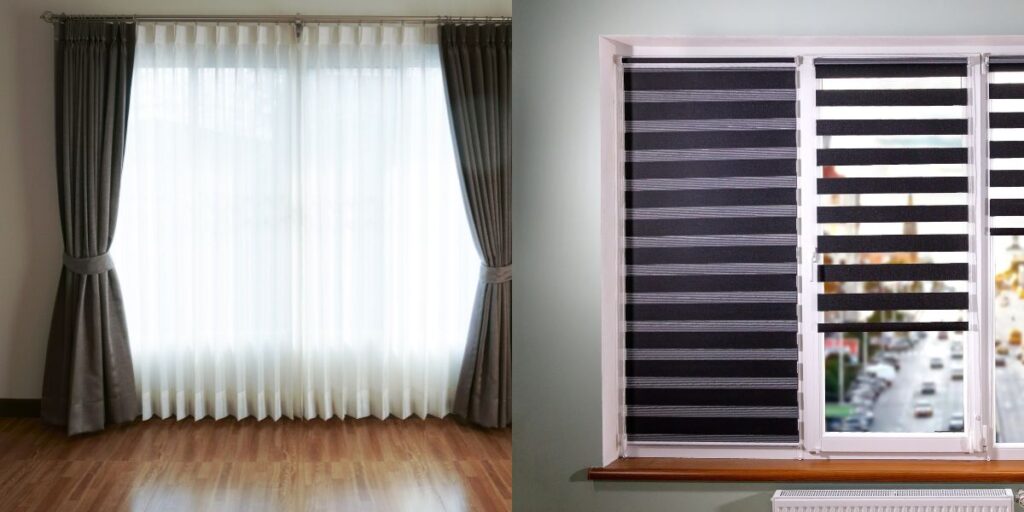
For a sophisticated appearance, curtains can be combined with sheers and blackouts for light control.
The advantages of curtains
- Cool appearance: curtains instantly enhance a space’s beauty.
- Light blocking: Heavy fabrics prevent the sun from illuminating your room.
- Soundproofing: Thick curtains are a good way to absorb noise.
- Insulation: It helps maintain the indoor temperature efficiently.
- Versatility: Multi-style, multi-color, and multi-fabric fabrics that can be matched to any decor.
The drawbacks of curtains
Here are some limitations of curtains.
- They need regular cleaning or washing.
- Their color can fade with time if exposed to sunlight continuously.
- They provide less precise control of light than blinds.
What are Blinds?
Blinds are adjustable and rigid window treatments. They are made of PVC or wood, and can also be manufactured from aluminum or faux wood. Blinds consist of vertical or horizontal slats that can be raised, lowered, tilted, and angled to regulate light or privacy. They are a great option for rooms that require a modern and cool look. They also offer durability and minimal maintenance.
Types of blinds
- Venetian Blinds: Horizontal slats with a tilting mechanism to control light.
- Vertical blinds: They are ideal for large sliding windows or doors.
- Roller Blinds: Roll-up blinds are simple fabric shades that can be rolled up.
- Roman Blinds: These are fabric blinds with folds that combine elegance with functionality.
Kitchens, offices, and bathrooms often use blinds because they are moisture-resistant and easy to clean.
The Benefits of Blinds
- Durability: Blinds are made from durable materials so that they will last for years.
- Simple Maintenance: Wipe the surface clean. No washing is required.
- Easy Light Control: You can adjust the brightness of sunlight by tilting the slats.
- Space saving: Their stylish, space-saving design is perfect for windows with small dimensions.
- Water Resistant: Ideal for moist areas such as bathrooms and kitchens.
The drawbacks of blinds
- Curtains can be less soft or cozy than other types of curtains.
- Their soundproofing quality is less effective.
- There are fewer decorative options and fabrics.
Difference Between Blinds and Curtains
The right window treatment for you depends on what’s important to you. Here is a detailed comparison.
1. Design and Aesthetic
- Curtains: The sheer curtains are soft, elegant, and available in a wide range of fabrics.
- Blinds: They provide a clean, modern look.
2. Light Control
- Curtains: The thickness of the curtain determines whether it is open or closed.
- Blinds: Slats that can be adjusted to control the light precisely.
3. Insulation and temperature control
- Curtains can trap heat and block drafts.
- Blinds fit tightly and prevent heat loss from windows.
4. Durability
- Curtains can fade or tear with the passage of time, with continuous sunlight exposure.
- Blinds are long-lasting and resistant to humidity, sun damage, and other factors.
5. Maintenance
- Curtains require periodic washing or drying.
- Blinds are easy to clean and ideal for dusty areas.
6. The Best Use of Rooms
- For a cozy feel, curtains are a great addition to bedrooms, dining rooms, and living rooms.
- Blinds for kitchens, bathrooms, and offices: Functionality and durability.
How to Layer Curtains and Blinds
Many homeowners layer their window coverings to achieve the perfect balance. Combining blinds and curtains to control light is a great way to achieve the perfect balance. It is a flexible approach that offers energy efficiency and an elegant aesthetic. The softness of the curtains and their color will allow you to adjust privacy and light.
FAQ
1. Do I need to use blinds and curtains together?
Yes, layering blinds and curtains together can provide maximum privacy and light control. This combines both the beauty of curtains and the practicality of blinds.
2. What is the best choice for energy efficiency, blinds or curtains?
Blinds that are tightly fitted prevent drafts, while heavy curtains effectively block out heat and cold. When chosen properly, both can provide insulation.
3. Are blinds easier to maintain than curtains?
Yes, because blinds can be cleaned with a simple wipe or dust, whereas curtains are often washed or dried. Blinds can be used in low-maintenance areas.
4. Are curtains better at blocking light than blinds?
Blackout curtains are generally more effective at blocking light than blinds. Sunlight can pass through blinds’ slats, edges, or edging.
5. What window treatments are suitable for humid environments like bathrooms?
The best blinds for humid areas are those made of aluminum or waterproof materials. In humid spaces, fabric curtains may shrink, fade, or even develop mold.
Conclusion
It is important to know the differences between blinds and curtains when creating a stylish, comfortable home. Curtains are ideal for living rooms and bedrooms because they add warmth and style. Blinds are durable, offer precise control of light, and require little maintenance. They’re perfect for offices, kitchens, or bathrooms. Combining both options offers the best solution in terms of style, privacy, and functionality.
You can choose the best window treatment by considering your room’s type, style preferences, and functional needs. By making an informed decision, you can ensure that your home looks great while remaining cozy, energy efficient, and simple to maintain.