Skip to content
Last month, I visited a friend’s apartment and her window shades lowered on their own. No cords, no effort. She said, “Alexa, movie mode” and the room went dark in 3 seconds. I realized window coverings have changed. They’re no longer just fabric on a rod.
Over the past year, I tested 6 different setups in my own home and my friend’s homes. Some were a waste of money. A few solved problems I’d accepted as “normal”.
If you’re planning to redecorate your windows. Smart shades, sustainable materials, zebra blinds, tip-down design, there’s a lot to consider. In this guide, I’ll walk you through the biggest window covering trend, explain where each option works best, and help you decide which ones are actually worth the money, and have the latest trend in window coverings.
Selecting Smart Shades
Powered motorized shades that operate without wiring. You control them with a phone app, voice assistant, or preset schedule. No electrician required.
Why They’re Growing Fast
- Safety first: Cordless design removes strangulation risks for children and pets. Many regions now restrict corded blinds in bedrooms for this reason.
- Automation: Light sensors and timers adjust shades based on sun position. Shade is turning lower when the afternoon shine hits your TV, then rises when clouds roll in.
In this situation, batteries need to be charged every 4 to 6 months. If the battery dies, you’ll operate the shade manually until it charges. Also, the charging alert sound can be loud in quiet rooms.
Bedrooms with large windows, such as our homes with children or pets, and anyone already using smart home devices. Start with one room to see if the automation system fits your routine before upgrading the entire house. This is the right way, which also gives you a chance to understand how often you actually use the smart features and whether the convenience matches your expectations in real life.
Sustainable And Natural Materials
Window coverings made from bamboo, jute, hemp, recycled PET bottles, and organic cotton. The focus is on Low-impact materials that last longer than plastic alternatives.
Why Demand Increased In 2025-2026
Buyers are moving towards PVC and cheap polyester that yellows and frays. Recycled fabric shades can use up to 70 percent less water during production compared to brand-new polyester materials. That change is measurable, not just marketing. On top of saving water, they also help to reduce plastic waste by giving new life to existing material, which makes them a more sustainable option for modern homes
Standout Options
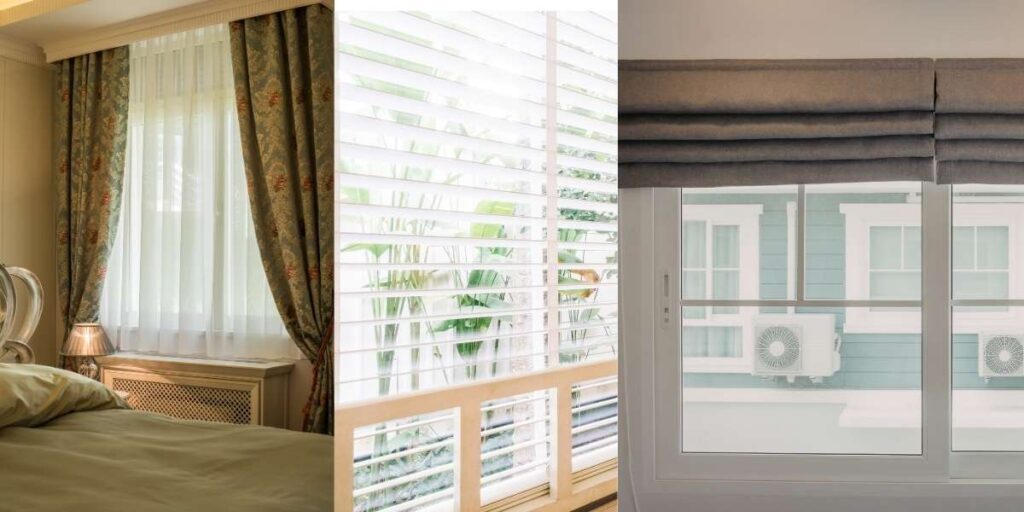
- Woven wood shades: Made from bamboo, grasses, and reeds. They filter light into a soft glow instead of harsh beams. They add warmth and texture to reading rooms and living areas.
- Recycled PET roller shades: Fabric made from recycled plastic bottles. The material is smooth, durable, and available in blackout weaves.
- Hemp and organic cotton curtains: Free from pesticides and synthetic finishes. They breathe better and hold up well over time, though the initial cost is higher.
Natural fibres do not help with moisture well. Bamboo shade in the bathrooms can develop Mold without proper ventilation. Save them for dry spaces.
Homes right now are focused on indoor air quality, allergy concerns, or long-term durability. Natural materials develop character with age instead of looking worn.
Dual-Layer And Zebra Shades: Lights And Privacy In One Product
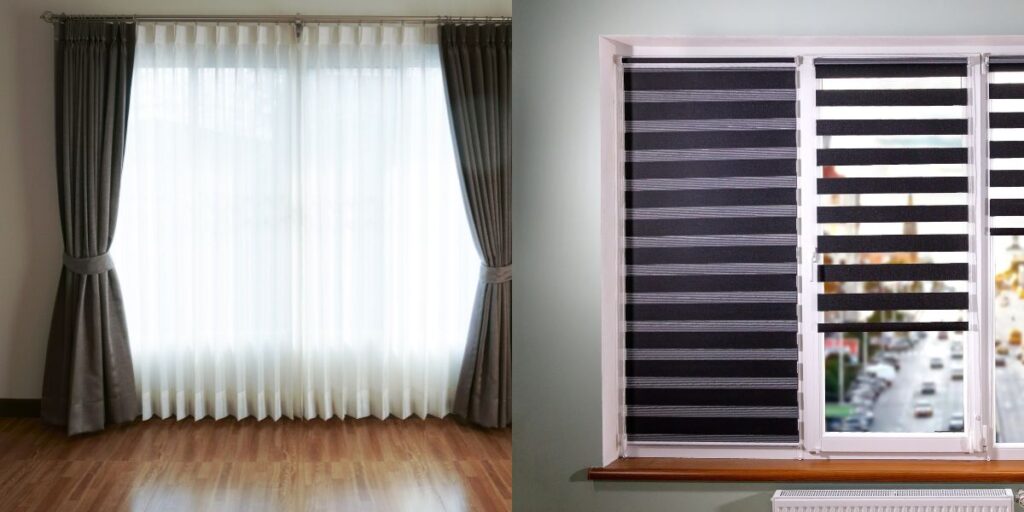
“Day and night shades” or “Zebra shades” use two alternating layers of fabric. Sheer stripes and solid stripes shift past each other. Align the solids for privacy, offset them for light.
Why Homeowners Like Them
Traditional setups forced a choice between softlight and privacy. Curtains provided light but poor privacy at night. Blinds provided light privacy but felt like a grid. Dual-layer shades solve both without layering multiple products.
How They Perform Daily
In the morning, offset the stripes for filtered light and a soft room glow. At night, line up the solid sections for full privacy. No separate sheer curtains needed. The design keeps the Window area cleaner and more modern.
Two layers of fabric collect more dust than single-layer shades. Homes with children should expect occasional misalignment of the stripes, which requires a quick adjustment.
Living rooms and home offices that need daylight during work hours and privacy after dark. Renters also benefit because one product replaces curtains plus blinds.
Floor-To-Ceiling And Oversized Installation
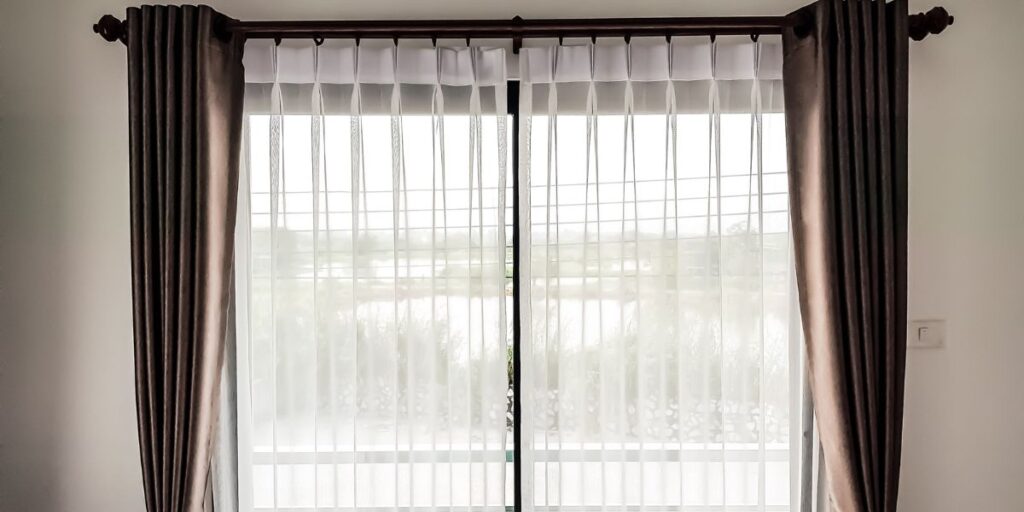
Curtains and shades are used to cover a 20 to 30cm wide area from the ceiling to the floor and beyond the window frame on each side. The goal is to make windows appear larger and the ceiling appear higher.
Why Designers Use This Approach
Vertical lines drag the eye up, which makes rooms feel larger. Extra width allows the drapes to stack completely off the glass when open, maximizing the natural light. A 1.2cm window can be visually perceived as 2m with the right placement.
2026 Updates
The trend is now shifted away from heavy velvet toward lightweight linen-look fabrics and hidden track systems. The result is the same dramatic height without the regular weight.
If rooms have low ceilings, small windows, or limited natural light. The installation works for renters too because curtain rods are easy to remove.
Top-Down Bottom-Up Shades: Privacy with Daylight
Cellular and roller shades that open from both the top and bottom. Lower the top section for daylight while keeping the bottom section closed for privacy.
Why It Solves A Common Problem
Street-facing bedrooms and ground-floor room often force a choice between natural light and privacy. Frosted window film was the old solution. Top-down, bottom-up shades provided a more flexible alternative.
Where They Work Best
Bathrooms, ground-floor bedrooms, and home offices are road-facing bedrooms. You get natural light from above without exposing the lower half of the room.
More moving parts mean more maintenance. Choose brands that include a solid warranty.
Any room where privacy is critical but complete darkness is not desired.
Color Directions
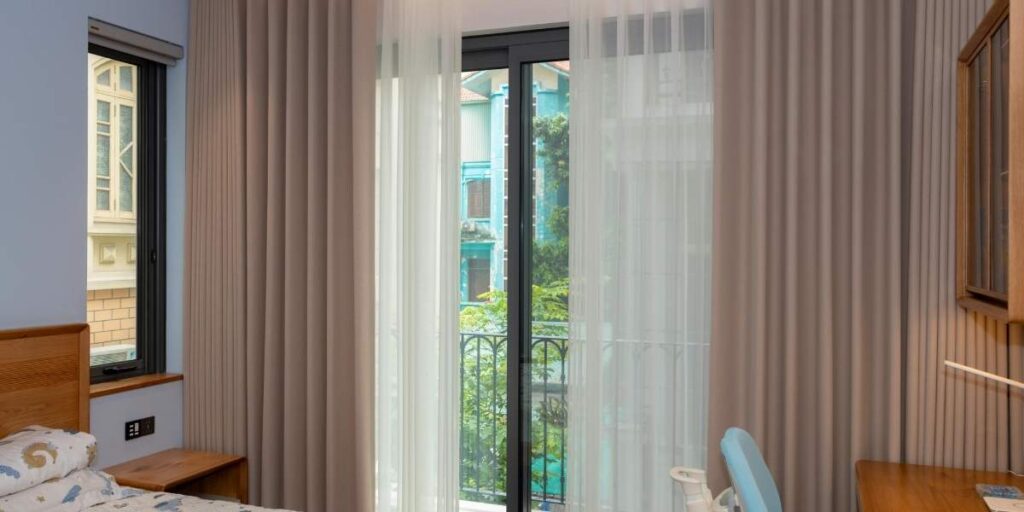
Panton’s 2025 “Mocha Mouse” influenced window coverings toward warm browns, clay, olive green, terracotta, and creamy beige. Cool gray blinds and curtains are declining.
Why It Works
After years of gray interiors, warm neutrals make rooms feel softer and more inviting. Light reflects differently off warm tones, creating a cozier atmosphere without repainting walls.
Pair cream curtains with walnut blinds. Try sage green shades with oak furniture. If you prefer timeless choices, white, cream, and light gray remain safe. For a current look, introduce mocha on olive on one window as an accent.
Recommendations By Room
Bedrooms
Motorized blackout roller shade with light-filtering curtains on a double rod. The motor handles daily light control. Curtains add softness and design. If the budget is limited, choose a manual backout roller and invest in quality fabric.
Living Room
Zebra or dual-layer shades in warm beige or olive. They deliver flexible light control and a modern appearance without extra layers.
Home Office
Cellular honeycomb shades with top-down button-up operations. They provide insulation for temperature control and allow daylight from above during video calls.
Conclusion
The main trend for 2026 is not a single product. It’s the shift
towards window coverings that adapt to daily life. Smart motors remove manual effort. Smart designs eliminate the trade-off between light and privacy.
For me, motorized blackout shades solved years of early morning light issues. For my mother, woven wood shades transformed her reading room into a calmer space. The right choice. Depends on how you use the room.
Looking for the best one, which perfectly solves your problem, and helps to design your window with the new trend style. Book your appointment with Elegance carpet.